Shaped to Connect
Good work still has to make room for others
Many years ago, I considered going back to a company I used to work for. Before I did, I called the person who had managed me there and asked him to be honest with me. He talked to some of the people I used to work with. The feedback was kind. They liked me and respected my work, but they did not think I was the right culture fit for the team. Ultimately, I was not asked to come back.
That still pops into my head every now and then. It did not match how I remembered my time there. I cared. I worked really hard. And I made things that had a real impact. It was devastating to hear at the time, but I am grateful for it now. It is the moment I started thinking differently about how I work.
I have always been more of a thinker and a doer than a talker. Given a problem, I would rather take it away, sit with it, and come back once I had figured something out than think out loud with people while it was still forming. I liked having ownership over an idea from start to finish, and there was something satisfying about disappearing into a problem and only resurfacing once I had the whole thing worked out.
The hard part was that it worked. Some of what I built went on to matter well beyond my time there. Some of the work was even recognized. That made it easy to believe my way of working was not costing me anything. What I did not understand yet was that I was building a reputation not just through the quality of the work, but through the way I got there. People do not just remember the deliverable. They remember what it was like to be around while it got made.
I do not think I noticed any of that while it was happening. Some of it was probably introversion and fear. I was much more comfortable working through things alone than walking into a room to explain a half-formed idea before I knew what I wanted to say. I also tend to have strong visions for things, and I worried that the more an idea got touched by other people early, the more it would get diluted. It is easier to call that focus than to admit that some of it was really about not wanting to be seen before I was ready.
I understood my own intentions, so I assumed everyone else could too.
Daniel Coyle wrote in The Culture Code that “vulnerability does not come after trust, it precedes it.” That has stayed with me because I thought trust was what allowed you to be vulnerable. I had the order backwards.
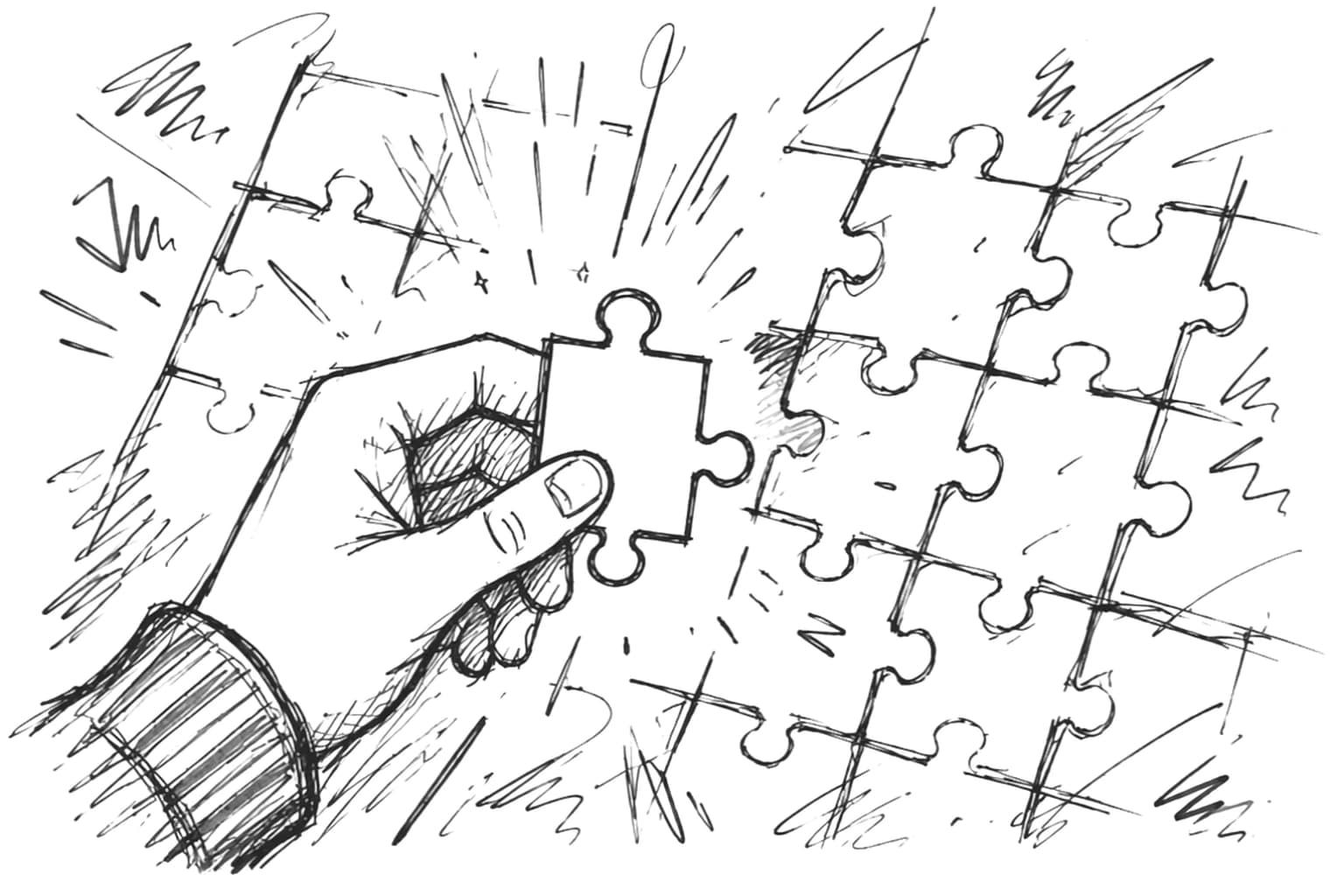
It is like a puzzle piece. It has its own shape and something specific to offer. It is not supposed to sand itself down into something generic depending on who is around it. But it also has to connect. The edges matter as much as the piece itself.
I had spent a lot of time developing the parts of myself that could make things, solve problems, and move ideas forward. I had spent years shaping the piece itself. I had not spent nearly as much time learning how its edges connected to anyone else's.
That meant learning to talk about the work earlier instead of waiting for the outcome to speak for itself. It meant bringing people in while an idea was still rough, even when that felt slower. It meant realizing that doing good work and being good to work with are two different skills, and I had mostly only been building one of them.
You can be talented and still leave people out without meaning to. You can have good intentions and still create confusion. You can move something forward and still make it harder for anyone else to feel like they are part of it.
I still like going deep on a problem alone. I still do some of my best thinking that way, and I still have the instinct to just start building. What is different now is that I notice sooner when that instinct starts creating distance. I try to talk about the work before it is finished instead of after, and I try to leave more room for other people to shape it with me.
A few things I carry from that experience:
- People do not experience your intentions. They experience your process.
- The habits that make you effective can also make you difficult to know.
- Working alone can produce excellent work while quietly weakening the relationships the work depends on.
- Protecting unfinished ideas also protects you from being seen.
- Being part of a team is not just contributing your piece. It is making it easier for other pieces to connect to yours.
It is not about becoming less of yourself. It is understanding where your shape ends and where the larger picture begins.