Designing for the 20th Ride
On designing for return delight, not just return behavior
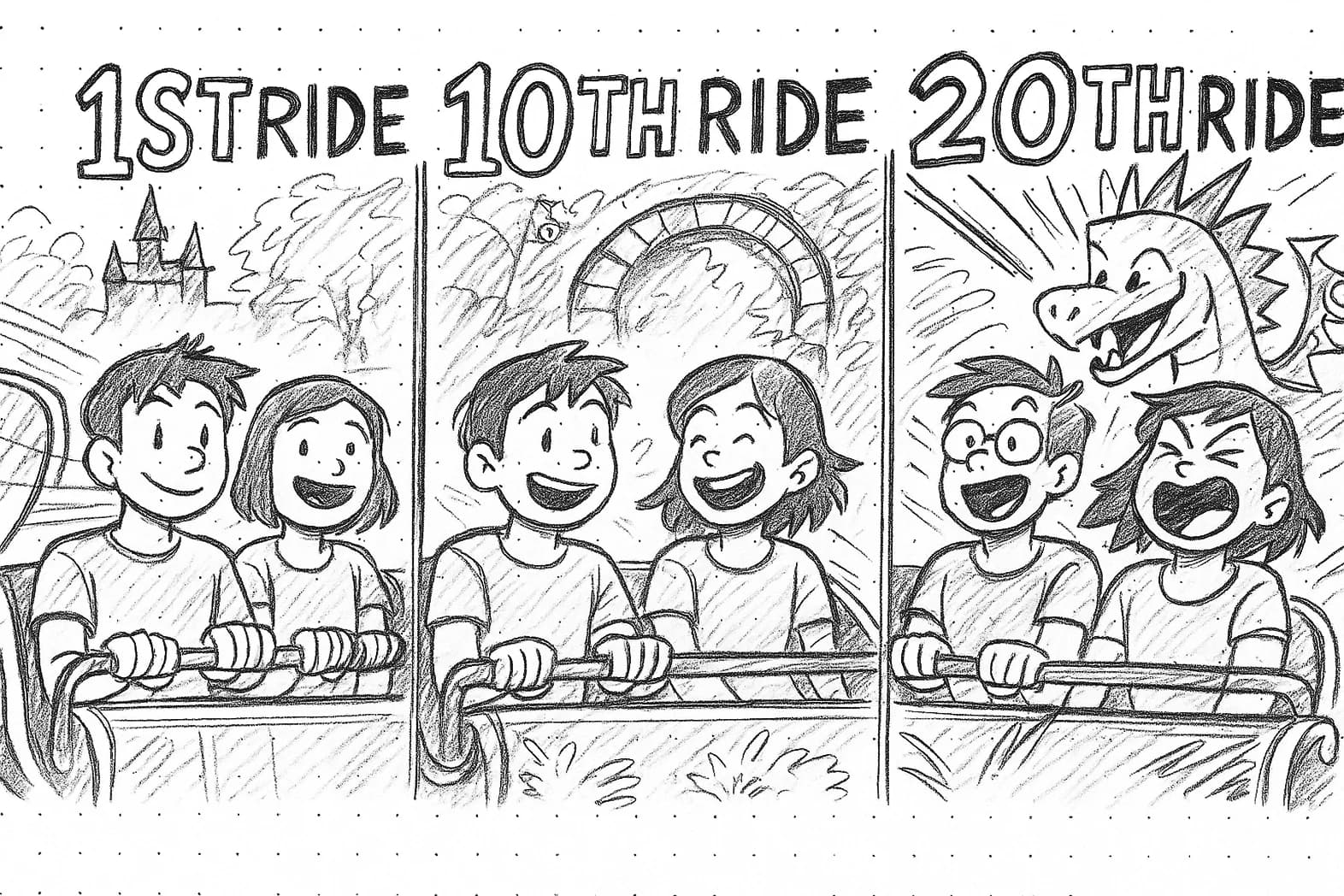
I came across a quote recently from Tony Baxter, one of Disney’s master Imagineers, in The Imagineering Story:
“I don’t design anything for the first ride, I design it for the twentieth ride.”
He then goes on to ask:
“What is it that’s appealing about something that I would want to ride on it twenty times?”
As someone who loves theme parks and builds digital products, I’ve come to realize: it’s not about making everything magical. But if you want people to come back again and again, it has to tap into something more lasting. What makes someone want to return? Not out of need, but by choice, again and again?
It’s one thing to build a product that works. It’s another to build one people want to return to—not just for what it does, but for how it makes them feel, what it helps them discover, and the way it continues to unfold long after it delivers the obvious value.
When Tony Baxter designed rides, he obsessed over what would make the twentieth ride feel fresh. He built in details that unfold over time; things you might miss the first ten times, but notice on the eleventh. Spaces that reward curiosity, and that make people feel like they’ve uncovered something, not just been handed it.
That’s a mindset I try to hold onto in product work. Not just: Does it work? But: Does it keep working? Does it stay interesting? Does it continue to give something back over time?
Of course, we all think about retention, just like Disney wants repeat visits. But in Imagineering, that goal transforms into a creative pursuit: designing for return delight, not just return behavior.
Baxter talked about three ingredients that help create a lasting Disney experience, and they translate surprisingly well to digital product design:
Storytelling
In the parks, it’s about transporting people to a world they couldn’t reach on their own. In product, it’s helping people imagine new possibilities, not just showing off features. A sense of narrative, transformation, and agency.
Thrill
That jolt of discovery, mastery, or momentum. On a ride, it’s a sudden drop or a breathtaking detail. In a digital product, it’s the spark of “I figured this out” or “I made this my own.”
Emotional residue
It’s the feeling that lingers after the experience ends. At Disney, it might be awe or joy. In our world, it could be pride, confidence, or a deeper sense of belonging. The best products don’t just work; they leave a mark.
I’d argue there’s a fourth ingredient too that’s easy to overlook:
Depth
The small details, edges, and layers that reveal themselves over time; the things you only notice when you’re not rushing. Products like Notion, Figma, or Minecraft do this brilliantly. Even after years, I still stumble across a new shortcut or a smarter way to work. And every time, it gives me a small jolt of delight. They keep me engaged, curious, and growing on top of being productive.
That’s the difference between a product that “works” and a product that keeps you invested. The ones people love most nail the value add, but always feel like they have more to give beyond feature releases.
It’s a question I keep coming back to in my own work: Would someone return to this twenty times? Thirty? Forty? If not, what’s missing?