A Brick. A Touch. A Story
Bringing a project to life with purposeful design
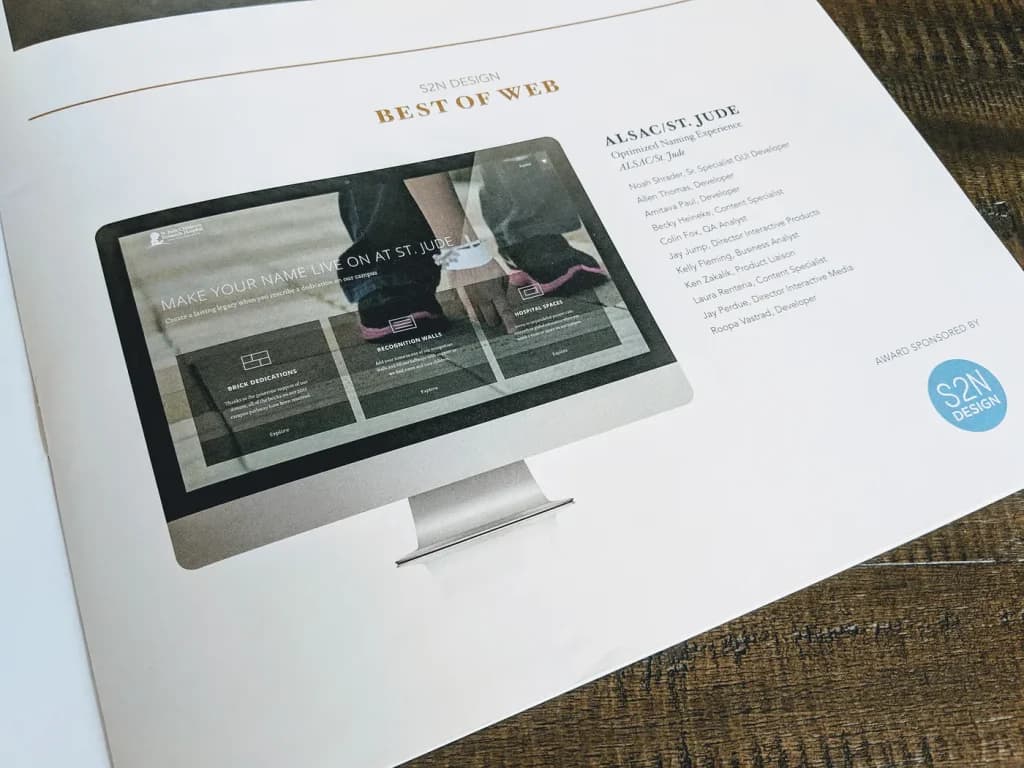
While digging through a stack of old books, I came across a program from a past American Advertising Federation invitational. It brought back a flood of memories. A website I had designed for St. Jude Children’s Research Hospital, where I previously worked, had been nominated and eventually won an ADDY. As I held the program, I was immediately taken back to the long project meetings, creative sessions, and the deep sense of purpose that came with designing for a mission that truly mattered.
I felt inspired to share a few reflections and lessons from that experience; one that shaped how I think about design, storytelling, and the emotional connection between people and digital spaces.
Designing for emotion, not just function
As digital designers, we know attention spans are short. You often have just a few seconds to make an impression. In that moment, your design needs to say something; to tell a story, to reflect empathy, to build trust. And if you do it right, that moment can turn into a lasting connection.
That was the thinking behind one of the more emotionally resonant projects I worked on at St. Jude: an e-commerce experience centered around dedication bricks, plaques, and rooms.
For context: St. Jude is one of the world’s leading pediatric cancer research centers. Their mission is funded largely through donations. One powerful way people contribute is through naming opportunities: adding their name to a brick along a walkway, a plaque on a hospital wall, or even dedicating an entire room.
Our challenge was to redesign an existing (but very outdated) experience for this program. It was a major revenue stream, so the stakes were high. But I was curious: How do you make bricks and plaques interesting? And more importantly, what really drives someone to give at this level, beyond just supporting a good cause?
So I started researching.
At the heart of it, people didn’t just want to contribute. They wanted to feel connected. To be part of something meaningful. The bricks and plaques were more than physical objects. They were symbols, representations of someone’s presence on campus. A way to feel closer to the patients, families, and caregivers they were supporting.
That realization led to a simple but powerful idea: What if we could show what that connection feels like?
Insight into impact: A ten-second story
At the time, video backgrounds on websites were becoming popular—short, soundless loops that played behind the content. When done well, they added mood, energy, and immersion. But more importantly, video is one of the most effective storytelling tools we have. So I decided to use it.
I asked: If you’re a donor, and your name is on a brick or plaque, what would it feel like to see a patient connect with that gift?
That became the creative brief. And with the help of our video team, we produced a simple, emotional 10-second sequence that played on the website homepage the moment you landed.
Here’s what it looked like:
- Scene 1: A young St. Jude patient walks down a brick-lined path, stops, and gently touches a name on a brick (3 seconds).
- Scene 2: Another patient walks down a hospital hallway, fingers trailing across a wall of dedication plaques (3 seconds).
- Scene 3: A plaque beside a hospital room comes into view. The camera slowly pulls focus to reveal a mother holding her child inside that room (4 seconds).
We deliberately kept the names on the bricks and plaques out of focus, so viewers could picture their own. That small detail made the experience feel personal.
The result was powerful. In just ten seconds, the homepage communicated not only what the offering was, but why it mattered. The donation wasn’t just a name. It was a lasting connection to a mission that helps children fight for their lives every day.
Key takeaways
This project reminded me of a few truths I carry into every design effort:
- Deep research fuels creative breakthroughs. The more you understand the real “why” behind what you’re building, the more impactful your work becomes.
- Emotion is a design tool. The most meaningful experiences don’t just function well. They resonate.
- Storytelling creates connection. When people can see themselves in the story, they’re more likely to take action.
This video background was just one detail in a much larger redesign, but it was the one that stuck with me the most.
If you ever get the chance to tour St. Jude Children’s Research Hospital, I highly recommend it. Having worked there for three years, I can say it was one of the most meaningful periods of my life. Hearing stories directly from patients, families, and doctors, seeing the discoveries being made in real time, it stays with you.
St. Jude doesn’t just treat illness. They lead research, care for families, and give children a fighting chance. I encourage you to learn more about their work and the incredible impact they have on so many lives.